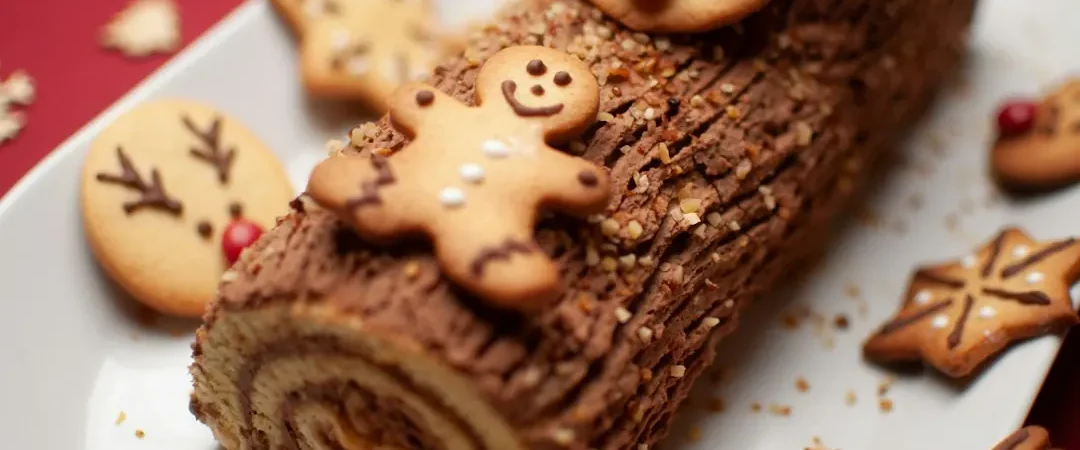
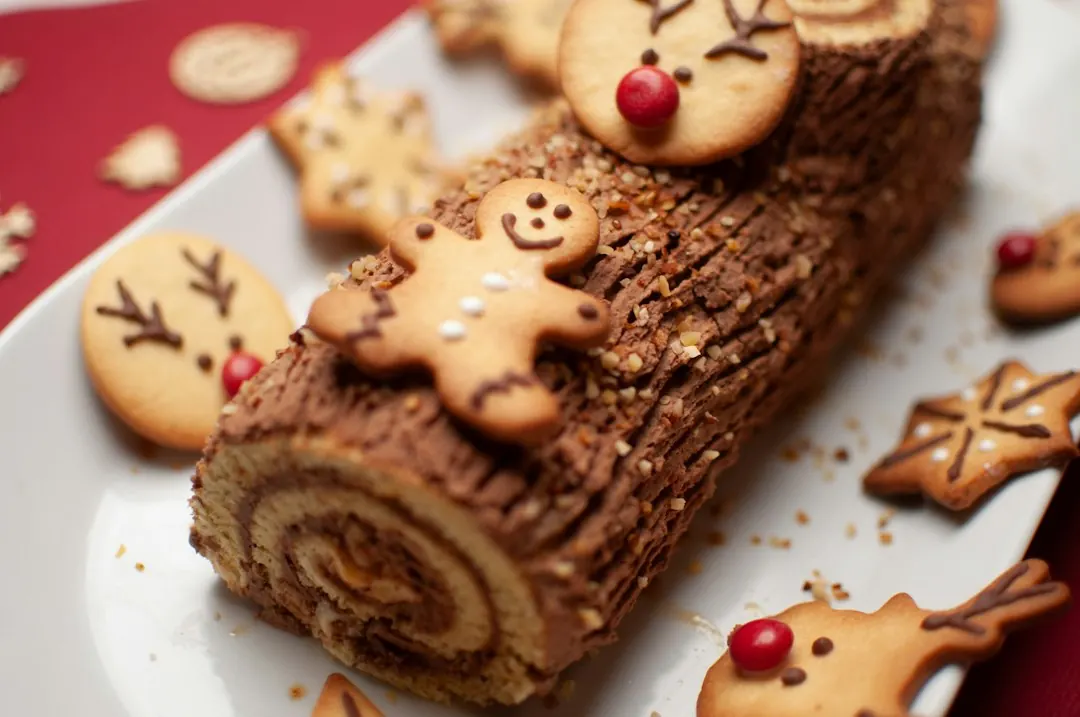
Short answer: A yule log cake, or bûche de Noël, is a thin sponge cake rolled around a filling, then covered in chocolate ganache or buttercream and textured with a fork to resemble bark. The trick to avoiding cracks is rolling the sponge while it’s still warm, before it has a chance to set flat.
Last updated: November 8, 2026.
What a Yule Log Cake Actually Is
A bûche de Noël is a French Christmas dessert shaped to resemble a log, traditionally a thin, flexible sponge cake spread with a filling (often a chocolate or coffee buttercream, or whipped cream), rolled into a cylinder, then coated in a chocolate or coffee-flavored icing and textured to look like bark. The name and tradition are generally associated with France, where the cake is thought to echo the older custom of burning an actual yule log in the fireplace over the Christmas season, a tradition recorded across several European cultures, though exact origins and the connection between the two customs are more folklore than precisely documented history.
The Sponge: The Part Everyone Worries About
The sponge needs to be thin, light, and flexible enough to roll without breaking, which rules out a standard thick cake batter. A classic genoise or a whisked sponge (eggs and sugar beaten to a thick, pale ribbon before folding in flour) baked in a thin, even layer in a lined sheet pan or jelly roll pan gives the right texture. Bake just until set and lightly springy to the touch, overbaking makes the sponge dry and far more likely to crack when rolled.
The Key Trick: Roll It While It’s Still Warm
This is the step that actually prevents cracking, and skipping it is the most common reason a yule log cake splits. As soon as the sponge comes out of the oven, turn it out onto a clean kitchen towel dusted with sugar or cocoa powder, peel off the baking paper, and roll the cake up inside the towel while it’s still warm and flexible, starting from one short end. Let it cool completely in this rolled shape. This “training” step teaches the sponge to hold a curved shape, so when you unroll it later to add filling, it rolls back up far more easily and with much less risk of cracking than rolling a cake that’s cooled flat.
Filling and Rolling the Final Cake
- Once fully cool, gently unroll the sponge from the towel.
- Spread an even layer of filling, buttercream, whipped cream, or a chocolate mousse, leaving a small border around the edges so it doesn’t squeeze out entirely when rolled.
- Roll the cake back up, this time without the towel inside, using the towel only to help guide and support the roll as you go.
- Wrap the rolled cake in plastic wrap and chill for at least 30 minutes before icing, this firms up the filling and makes the cake easier to handle.
Icing and Creating the Bark Texture
Trim a small diagonal slice off one or both ends of the roll and attach it to the side of the log with a little icing, creating the look of a cut branch stump, a classic decorative touch. Cover the whole cake in chocolate ganache or chocolate buttercream, then drag the tines of a fork lengthwise through the icing in long, slightly uneven strokes to create a bark-like texture. A light dusting of powdered sugar afterward gives the effect of a dusting of snow, and small decorations, meringue mushrooms, sugared cranberries, or a sprig of rosemary, finish the look.
Common Problems and Fixes
- The cake cracked when I rolled it: most likely it cooled flat before the first roll, or it was overbaked and too dry. Roll it warm next time, straight from the oven, and check doneness a minute or two earlier.
- The filling squeezed out the ends: leave a wider border without filling around the edges, and don’t overfill, a thinner, even layer rolls more cleanly than a thick one.
- The icing is too soft to hold the fork texture: chill the iced cake briefly, or use a slightly firmer ganache ratio (more chocolate relative to cream).
- Small cracks appeared anyway: this is genuinely normal and not a failure, the ganache and classic bark texture hide small surface cracks very well, and a few are part of how a real log looks.
Make-Ahead and Storage
A bûche de Noël can be made a day ahead, assembled, iced, and refrigerated, which actually helps it hold its shape and makes slicing neater. Keep it refrigerated and bring it out about 20 to 30 minutes before serving so the filling and icing aren’t too firm to cut cleanly. It also freezes well at the rolled, unfrosted stage, wrap tightly and thaw in the fridge overnight before filling and icing fresh.
Frequently Asked Questions
Why does my yule log cake crack when I roll it?
Usually because the sponge cooled flat before being rolled the first time, or it was slightly overbaked. Roll it warm, straight from the oven, inside a towel, then let it cool in that rolled shape.
What is a bûche de Noël?
A French Christmas dessert: a thin rolled sponge cake filled with buttercream or cream, then iced with chocolate ganache textured to look like bark, shaped to resemble a log.
Can I make a yule log cake ahead of time?
Yes, it can be fully assembled and refrigerated a day ahead, or frozen unfrosted and iced fresh after thawing.
Are small cracks in the icing a problem?
Not really. The bark texture and ganache hide small surface cracks well, and a few irregular marks are part of how a realistic log looks.